


Safeguarding and gender training to help Tuvalu sporting bodies protect athletes and increase participation of girls in sports
A joint initiative by TASNOC, Team Up and partners.
Tuvalu’s sporting community is taking a proactive step to make sport safer and more inclusive, with coaches, staff and students participating in a safeguarding essentials and gender sensitisation training organised by the Tuvalu Association of Sports and National Olympic Committee (TASNOC) and facilitated by the Australian Government’s Team Up program. The training was delivered as part of the technical support provided through the Oceania Impact Network and with funding support from Commonwealth Games Australia (CGAus) under the Empowering Women Initiative 2025.
The workshop was designed to enable staff, coaches and administrators to recognise and prevent harm, promote gender equality in sports and align TASNOC with regional best practices in safe sport. It was held over four days last month.
“The safeguarding and gender training is important for us to ensure all athletes and participants are protected, respected and included. By building awareness and strong policies, we can help foster a safe and inclusive sporting environment in Tuvalu. We are grateful for the technical support from Team Up to design and deliver the training and hope to continue working together” said Alice Ave, Sport Education Officer of TASNOC.
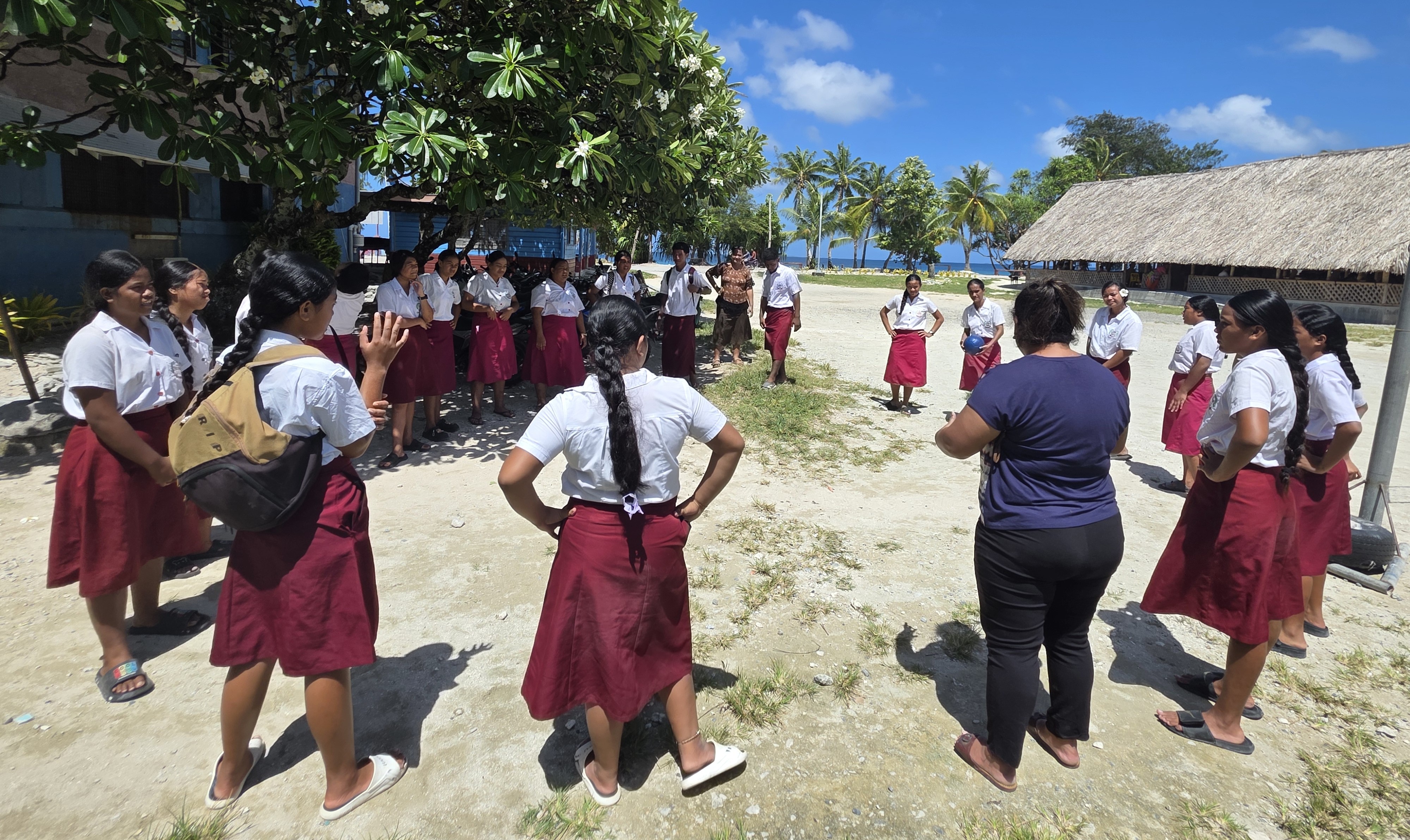
Held over four evenings, the training also included a half-day session with over 45 students from Fetuvalu Secondary School. The session was especially timely with several students preparing to travel to Fiji in December for a regional rugby tournament.
Students learned about different forms of harm, who to report incidents to and participated in a session on ‘Our Body’ to better understand physical boundaries and consent. Activities also explored what feeling safe and unsafe means, and how to recognise high risk situations.
"This training deepened my understanding of safeguarding and gender in sport, reminding me that in Tuvalu, resilience is not only about adapting to climate challenges but also about creating safe, inclusive spaces where harmful norms are challenged, voices are respected, and every individual, especially our youth, can thrive. I now feel confident to embed safeguarding and gender awareness into our sporting culture so we can strengthen communities and our nation's future." said Jose Vitale from Tuvalu Rugby Union.
Team Up’s safeguarding and gender training is to support national sporting bodies, organisations and athletes to understand the principles of safeguarding in sports, identify poor practices in sports and address gender-related issues. Participants also looked at the differences between gender and sex, how gender norms and stereotypes manifest in sport and strategies to challenge and change harmful gender norms.
Roshika Deo, Team Up Gender Equality, Disability and Social Inclusion (GEDSI) and Safeguarding Advisor shared, “It was good to be back in Tuvalu supporting TASNOC with their safeguarding initiatives. TASNOC has shown great leadership in creating awareness on safeguarding in sports and continues to create opportunities to support their national federations. This training provided an opportunity for participants to discuss the next level which is to develop safeguarding policies and procedures for their national federations. The conversations on gender stereotypes and harmful norms in sport led to reflections on behaviour and attitudes prevalent in sport which can perpetuate inequality for both girls and boys.”
Team Up programs operate across community, school and sporting settings, using sports to bring people together, champion inclusion and create opportunities. Varying by country, from initiatives addressing gender-based violence to inclusive programs for people with and without disabilities to participate together, and leadership pathways for women on and off the field.
The Oceania Impact Network is a collective of committed stakeholders who share a common vision of promoting gender equality, inclusion, and safety in and through sports in the Pacific. It is made up of the Australian Government’s sport for development program Team Up; UN Women, through the Pacific Partnership to End Violence Against Women and Girls (Pacific Partnership) funded primarily by the Government of Australia, and the European Union; the Oceania National Olympic Committees (ONOC), through its Equity Commission; and the International Olympic Committee (IOC) through Olympism365 and Olympic Solidarity.
MORE NEWS
Play for Equity Fifth Round - Frequently Asked Questions
06 July 2026
Safeguarding for Major Sporting Events Toolkit Launch a Milestone for the Pacific
02 June 2026- Safeguarding
New Round of Play for Equity Grants Advancing Gender and Disability Justice through Sport in the Pacific
22 May 2026
Finding Confidence through Sport: Emmanuel Sevara’s Inclusive GymBad Journey
14 April 2026- Disability
- Badminton
- Papua New Guinea